Nothing stings quite like seeing budget go into tools that deliver only a fraction of the impact they should.
Whether it’s unused licences, overprovisioned cloud workloads, or advanced tools no one uses, IT budget waste can quickly build up.
With Microsoft 365, that frustration can carry a big price tag. If your teams aren’t embracing the tools properly, you’re not just underperforming, you’re wasting money every month.
Where Adoption Breaks Down and Why It Matters
Adoption often stalls at the basics. Staff rely on Outlook daily, perhaps use Teams for quick chats, but the deeper collaboration and productivity gains remain untouched.
One study found that although 79% of organisations deploy OneDrive, fewer than 20% of employees use it actively, with adoption of Exchange and SharePoint even lower. That underuse quietly drains ROI while competitors who adopt more fully gain speed, efficiency, and agility.
This poor adoption creates ripple effects that go well beyond IT. Budgets are drained, teams fall back on outdated workflows like long email chains, and the promised collaboration benefits of Microsoft 365 never materialise. Over time, this results in lower productivity and an increasing disadvantage against competitors who use the tools effectively.
This isn’t just an IT challenge. It’s a business challenge. Business leaders need visibility into adoption so they can protect their investment and stop these hidden costs from eroding the bottom line. This is where the Microsoft Adoption Score helps. It’s a tool that highlights adoption gaps and helps business leaders turn unused software into measurable value.
How the Microsoft Adoption Score Drives Visibility
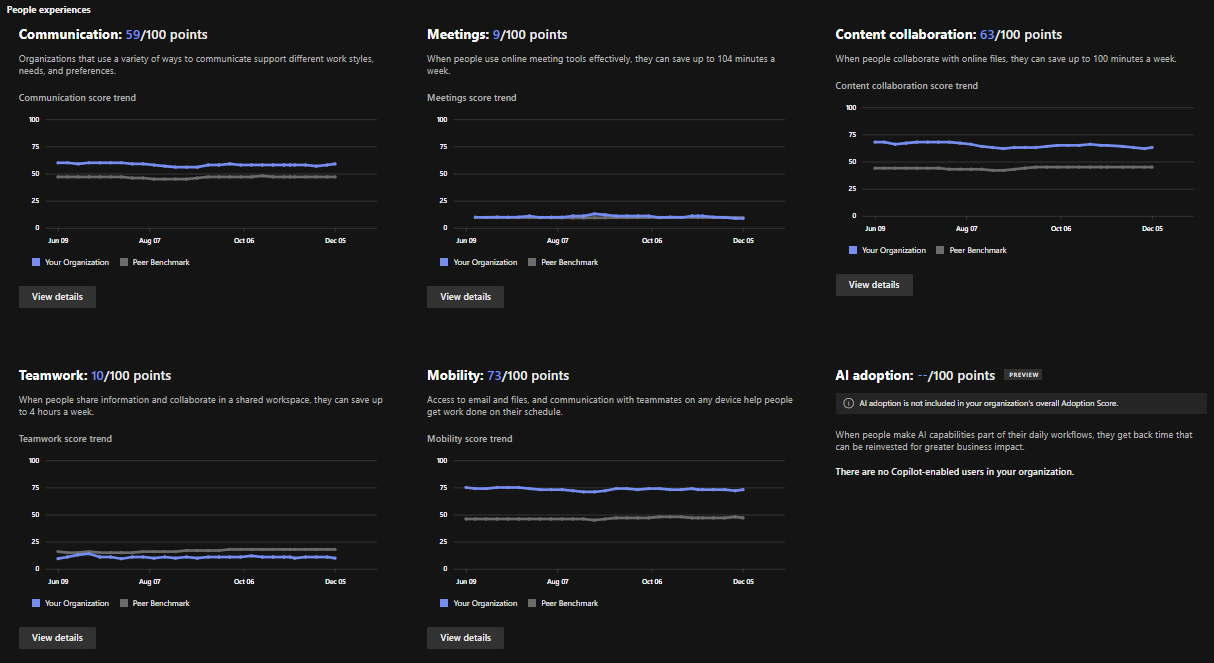
The Microsoft Adoption Score provides the visibility organisation needs. It shows which apps are being used and which are ignored, how employees are collaborating, and how your business compares with others of a similar size, with Microsoft Peer Benchmarking analysing and rating your score against businesses of a similar size and stage in their digital transformation .
Importantly, it offers practical recommendations for improvement.
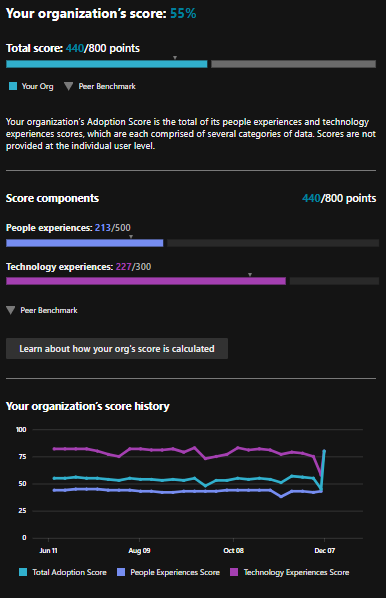
Data only matters if you act on it. The best organisations analyse their Adoption Score to direct training and make improvements to teams that need it most. It also supports smarter ways of working by highlighting where tools like Teams and OneDrive can be correctly utilised with best practice. Crucially, it lets you measure adoption progress over time and tie it directly to productivity gains.
We recommend using Adoption Score to help drive digital transformation through acting on unique insights to your organisation, reinforcing:
Mobility through cloud collaboration with access to all Microsoft 365 tooling across multiple platforms to enhance productivity and satisfaction.
Teamwork by assessing meeting quality and utilising workspaces such as Teams Channels to centralise communication and encourage best practices.
Leadership through creating dashboards and reports for tracking, sharing progress, and adjustments to strategies.
By doing so, Microsoft 365 stops being a sunk cost and becomes a measurable driver of efficiency and growth.